What Is Within Your Control? A Practical Approach for Injury, Chronic Pain and Recovery
Introduction
When you are dealing with a workplace injury, chronic pain, or a long-term health condition, it can feel like much of your life is no longer in your control.
There may be ongoing symptoms, uncertainty about recovery, and decisions being made by insurers, workplaces, or other systems.
It’s not unusual for your mind to focus on these things — especially when they feel important.
However, this can increase stress and make it harder to cope day to day.
A helpful approach is learning to separate:
- what is within your control, and
- what is outside your control
Why Focusing on What You Can Control Matters
When we focus on things we cannot control, such as:
- how long recovery will take
- when decisions will be made
- how others respond
it often leads to:
- increased stress and anxiety
- frustration and mental fatigue
- feeling stuck or overwhelmed
Even though these concerns are understandable, repeatedly thinking about them does not change the outcome.
Over time, this can drain your energy and make recovery feel harder.
What Is Outside Your Control?
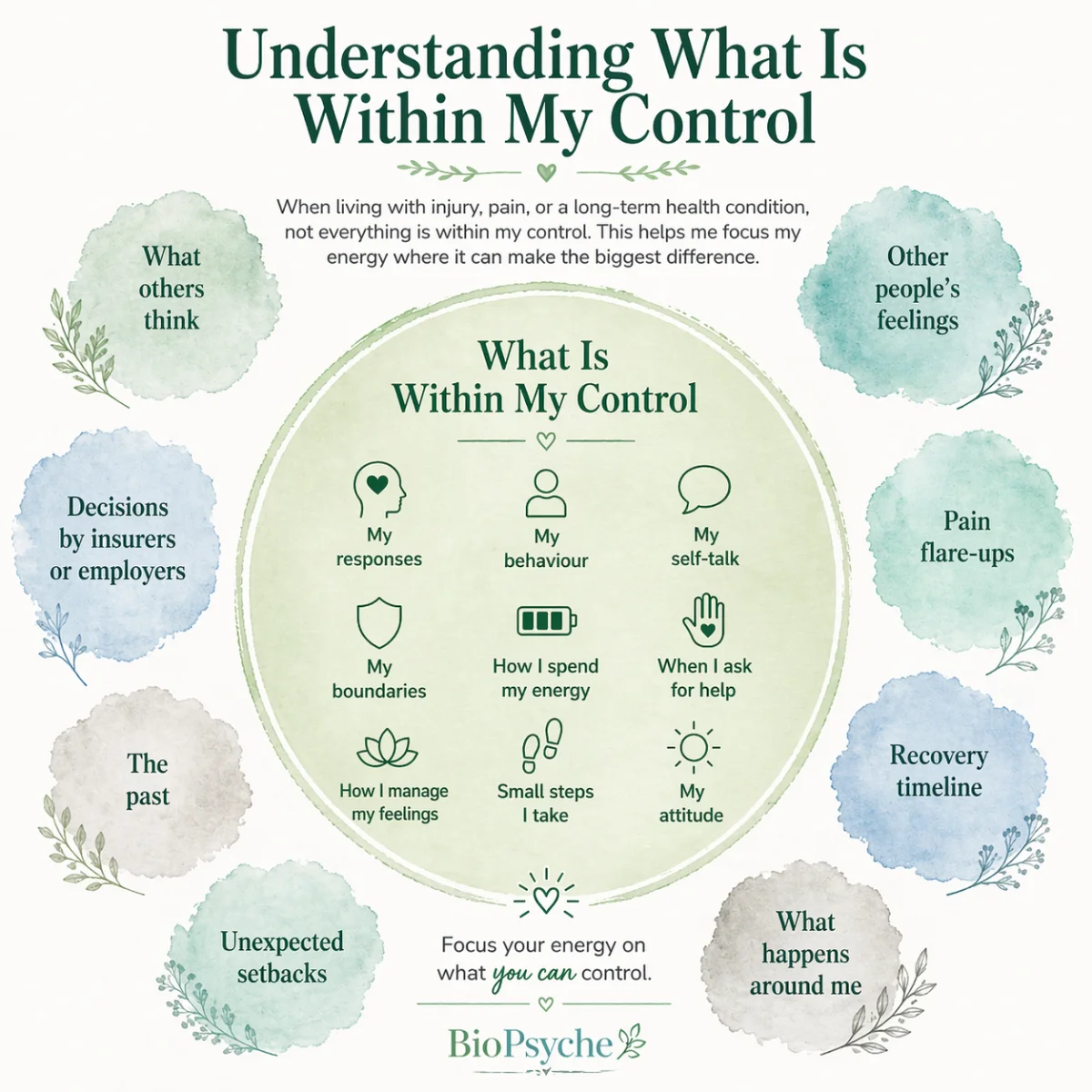
In the context of injury, chronic pain, or workplace recovery, some factors are simply not within your control.
These can include:
- recovery timelines
- pain flare-ups or symptom changes
- decisions made by insurers or employers
- delays in systems or processes
- other people’s opinions or expectations
- past events
Trying to manage or predict these often increases stress without improving the situation.
What Is Within Your Control?
Even when things feel limited, there are still areas where your actions can make a meaningful difference.
These include:
- how you pace your day and manage your energy
- when you rest and when you engage in activities
- how you respond when symptoms increase
- your self-talk
- the small steps you take each day
- asking for support
- where you focus your attention
These may seem small, but they are often the most helpful places to direct your energy during recovery.
A Simple Strategy to Refocus Your Attention
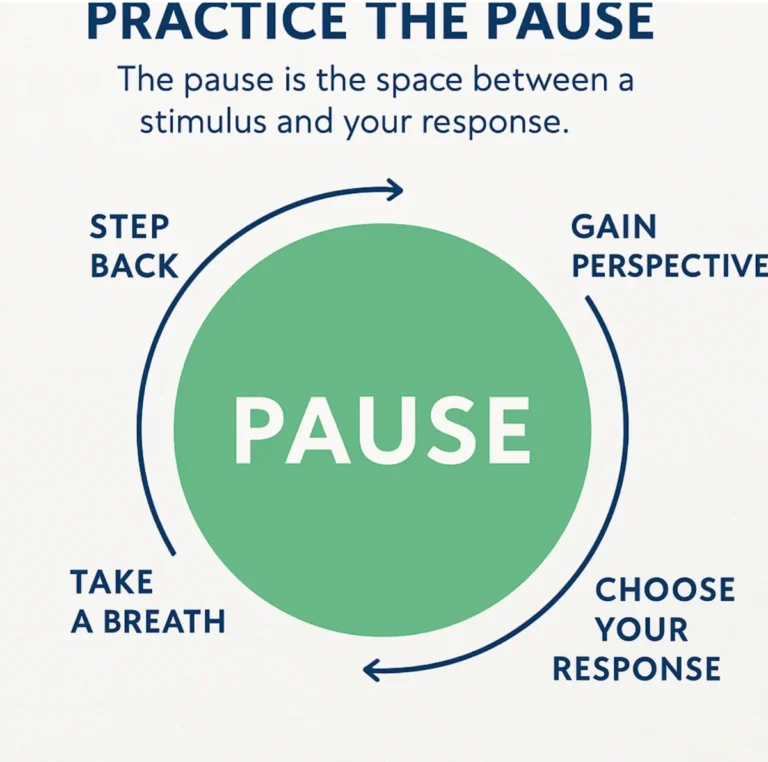
When you notice yourself feeling overwhelmed, pause and ask:
“Is this something I can influence right now?”
If the answer is no, gently bring your focus back to something you can do.
You might then ask:
- “What do I need right now?”
- “What is one small step I can take today?”
Shifting Your Focus Without Ignoring the Problem
This approach is not about ignoring difficulties or pretending things are okay.
Instead, it involves:
- recognising what is outside your control
- reducing how much energy you spend on it
- redirecting your attention toward manageable actions
This might include:
- taking a planned rest break
- completing a small task
- attending an appointment
- using a coping strategy
Why Small Steps Support Recovery
Recovery from injury or chronic pain is often gradual and not always predictable.
It is common for progress to feel slow or uneven.
However, small, consistent steps can:
- support routine and structure
- reduce avoidance
- build confidence over time
- improve overall functioning
Even when symptoms are still present, these steps contribute to meaningful progress.
A More Sustainable Way to Cope
Trying to control everything can increase pressure and frustration.
A more helpful approach is:
Focus your energy on what is manageable, not everything that feels important.
This can reduce stress and support more effective coping over time.
Final Reflection
If you are currently managing injury, chronic pain, or recovery, you might take a moment to consider:
- What am I focusing on that I cannot control?
- What is one small thing I can do today?
Gently bringing your attention back to these areas can support your wellbeing and help you move forward, one step at a time.
Read more about psychological therapy for injury, chronic illness and recovery.
About Suzanne