
Life comes at us fast. A sharp email. A driver cutting us off. A partner’s tone that hits a nerve. Before we even realise it, words fly out, emotions flare, and we’re left thinking: “Why did I react like that?”
That’s where practicing the pause comes in.
What is “the pause”?
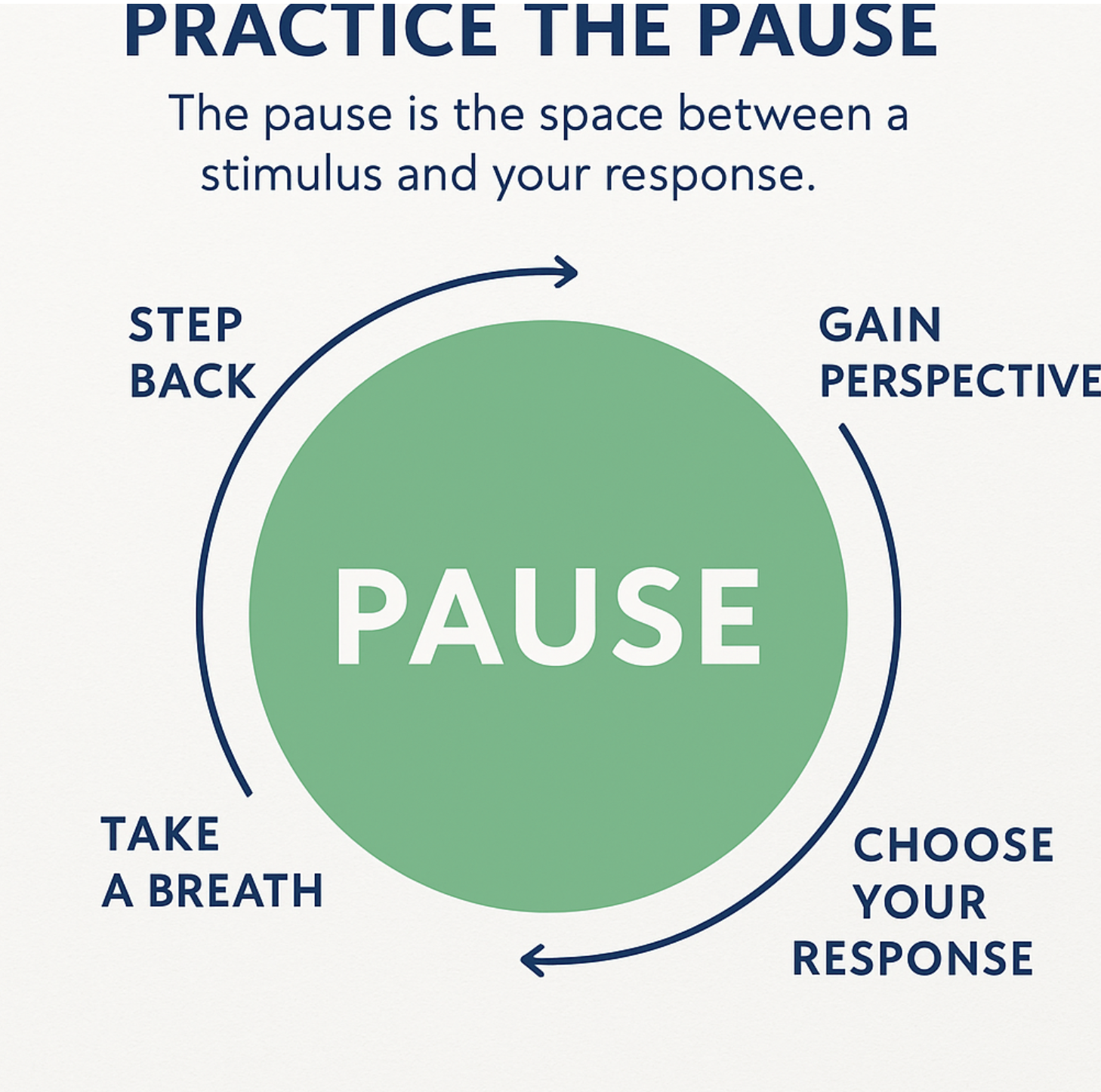
The pause is the space between what happens to you and how you respond.
It’s that moment you take a slow breath instead of snapping back.
It’s choosing silence for a beat before sending a reply.
It’s standing back, even briefly, to ask: “How do I want to handle this?”
The pause doesn’t mean avoiding conflict or stuffing down feelings. It means responding with intention rather than reacting on autopilot.
Why the pause matters
When emotions run high, the part of our brain responsible for quick reactions (hello, fight-or-flight) takes the wheel. Pausing allows the calmer, wiser part of our brain—our prefrontal cortex—to catch up.
The benefits are huge:
- Less regret over words said in anger
- More thoughtful decisions
- Greater self-control and resilience
- Stronger, calmer relationships
- A sense of living more aligned with your values
When to pause
You don’t need to pause every time someone says “hi.” But here are some golden moments when the pause can transform things:
- When you’re criticised or blamed
- When a situation feels unfair
- When stress or overwhelm builds up
- When a decision feels urgent but emotionally loaded
- When you notice your body tensing or your heart racing
How to practice the pause
Like any skill, it takes practice. Here’s how to start:
1. Notice your cues
Your body often knows before your mind does. A racing pulse, clenched jaw, or tight chest? That’s your signal to pause.
2. Breathe
Even one deep inhale and exhale can reset your nervous system and give you precious seconds of calm.
3. Ground yourself
Feel your feet on the floor. Drop your shoulders. Notice something around you—the colour of the wall, a sound, your breath.
4. Ask wise questions
- What’s really happening here?
- What response will help, not harm?
- If I pause now, what choice will I be proud of later?
5. Respond, don’t react
The goal isn’t perfection—it’s progress. Sometimes the wisest response is no immediate response at all.
Daily “pause practice”
You can build this skill in small ways:
- Take three slow breaths before answering the phone
- Wait a few minutes before replying to emails when you’re frustrated
- At night, reflect: “Where did I pause today? Where could I have paused?”
Over time, this pause becomes second nature. And that small space? It’s where calm, clarity, and freedom live.
✅ Takeaway: Pausing doesn’t mean weakness. It’s a sign of strength. In the pause, you reclaim your power—not to control what happens around you, but to choose how you respond.